Artificial intelligence

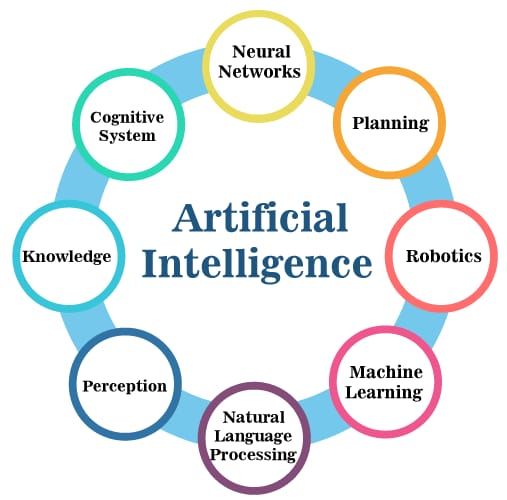
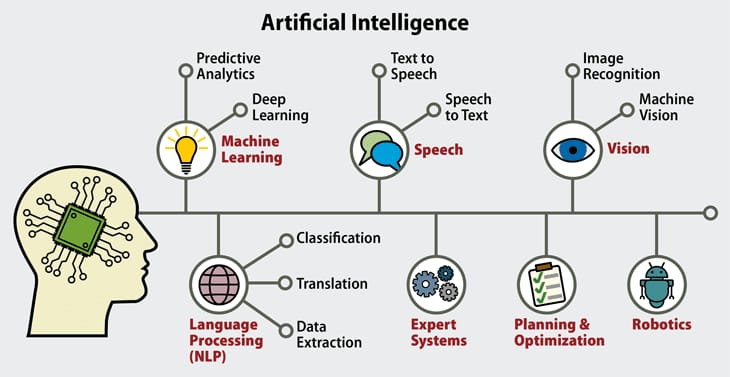
The multidisciplinary realm of Artificial Intelligence (AI) research delves into an array of subfields, each with its unique goals and tools. These objectives include but are not limited to reasoning, knowledge representation, planning, learning, natural language processing, perception, and support for robotics[a]. Additionally, the ambitious pursuit of general intelligence, defined as the ability to perform tasks on par with human capabilities, stands as a prominent long-term goal within the field[4].
In the quest to realize these aims, AI researchers have skillfully incorporated a broad spectrum of techniques. These encompass search and mathematical optimization, formal logic, artificial neural networks, as well as methods founded on statistics, operations research, and principles rooted in economics[b]. AI’s expansive reach extends to disciplines such as psychology, linguistics, philosophy, neuroscience, and an assortment of other interconnected fields[5].
Artificial intelligence was founded as an academic discipline in 1956,[6] and the field went through multiple cycles of optimism,[7][8] followed by periods of disappointment and loss of funding, known as AI winter.[9][10] Funding and interest vastly increased after 2012, when deep learning outperformed previous AI techniques, sparking a resurgence of enthusiasm and investment in AI research and development.

This growth accelerated further after 2017, marked by the introduction of the transformer architecture, which revolutionized natural language processing and machine translation capabilities. By the early 2020s, hundreds of billions of dollars were being invested in AI, leading to what is commonly referred to as the "AI boom." This era saw monumental advancements in various sectors, including healthcare, finance, and autonomous vehicles, among others, as AI technologies became deeply integrated into everyday life.

However, the widespread use of AI in the 21st century did not come without challenges. It exposed several unintended consequences and harms, prompting discussions about regulatory policies to ensure the safety and ethical use of the technology. Concerns about the ethical implications, bias in AI systems, job displacement, and the long-term effects of AI on society have pushed for a thoughtful and cautious approach towards the development and deployment of AI technologies. This has led to a shift in focus towards responsible AI and the exploration of regulatory frameworks aimed at mitigating the potential risks while leveraging the benefits offered by artificial intelligence.

As we move forward, the dialogue around AI continues to evolve, with an increasing emphasis on establishing ethical guidelines, accountability, and transparency in AI systems, to create a future where AI is harnessed for the greater good, while safeguarding against its potential negative impacts.

Artificial intelligence (AI) presents potential dangers and challenges that warrant careful consideration and proactive management. Some of the key concerns related to AI include:
- Ethical Implications: The development and deployment of AI raise ethical questions pertaining to privacy, bias, and accountability. Issues such as data privacy breaches and algorithmic biases underscore the need for responsible AI governance and oversight.
- Job Displacement: AI-driven automation has the potential to disrupt industries and lead to job displacement, particularly in sectors where repetitive tasks can be effectively performed by AI systems. This highlights the importance of reskilling and upskilling the workforce to adapt to the changing employment landscape.
- Security Vulnerabilities: As AI systems become more sophisticated, the risk of cyber attacks and misuse of AI for malicious purposes increases. Ensuring the security and robustness of AI systems is critical to prevent potential breaches and safeguard sensitive data.
- Inequality and Access: The unequal access to AI technologies and benefits can exacerbate societal inequalities. It is crucial to address disparities in AI adoption and ensure that AI applications are developed with inclusivity and fairness in mind.
- Autonomous Weapons: The development of autonomous weapons powered by AI raises ethical and humanitarian concerns. The lack of human oversight in decision-making processes has the potential to escalate conflicts and jeopardize global security.
- Loss of Human Control: Unchecked advancement of AI systems could lead to a loss of human control over critical systems and decision-making processes. Establishing frameworks for transparent and accountable AI governance is essential to mitigate this risk.
- Misinformation and Deepfakes: AI-powered tools can be used to create sophisticated misinformation and deepfake content, posing risks to public discourse, trust, and authenticity.
Recognizing and addressing these dangers is crucial to harnessing the benefits of AI while minimizing potential negative impacts. It is imperative to approach the development and deployment of AI responsibly, with a focus on transparency, accountability, and ethical considerations.
Advantages of Artificial Intelligence
Artificial Intelligence (AI) offers a wide range of advantages across various domains, revolutionizing the way tasks are performed and problems are solved. Some of the key advantages include:
- Increased Efficiency: AI technologies enable automation of repetitive tasks, leading to improved operational efficiency and productivity in various industries. This allows human workers to focus on more complex and creative endeavors, driving overall efficiency gains.
- Enhanced Decision-making: AI systems have the capability to analyze vast amounts of data at incredible speeds, providing valuable insights and supporting data-driven decision-making processes across business and scientific domains. This contributes to better-informed strategic planning and decision-making.
- Advanced Healthcare: AI empowers healthcare professionals with diagnostic and predictive tools that aid in early disease detection, personalized treatment plans, and medical image analysis. This leads to improved patient outcomes and the potential for more effective healthcare delivery.
- Personalized User Experiences: AI algorithms enable personalized recommendations and content curation in fields such as e-commerce, entertainment, and digital marketing. This fosters enhanced user engagement and satisfaction by tailoring experiences to individual preferences.
- Improved Customer Service: AI-powered chatbots and virtual assistants offer responsive and efficient customer support, enhancing overall customer satisfaction and enabling businesses to address inquiries and issues around the clock.
- Advancements in Education: AI technologies facilitate personalized learning experiences, adaptive tutoring systems, and educational content customization, catering to individual student needs and enhancing the effectiveness of teaching and learning processes.
- Environmental Impact: AI contributes to the development of smart energy management systems, resource optimization, and environmental monitoring, potentially leading to more sustainable practices and reduced environmental impact in various industries.
- Innovations in Research and Development: AI fosters innovation by accelerating research processes, automating complex tasks, and identifying patterns within large datasets, ultimately driving advancements in scientific discovery and technological development.
- Enhanced Safety and Security: AI systems are utilized in surveillance, threat detection, and cybersecurity, bolstering safety measures and supporting the identification of potential risks in diverse settings.
The advantages presented by AI showcase its transformative potential across sectors, contributing to enhanced productivity, innovation, and quality of life, while also paving the way for further advancements and opportunities.
thanks you
Ansh Saini
ba program 043
 Site Title
Leave a comment